Municipal & Road Lighting
Compliant, energy-efficient illumination for urban arterials, residential streets, highways and rural roads — grid-powered or fully solar.
Requirements & configuration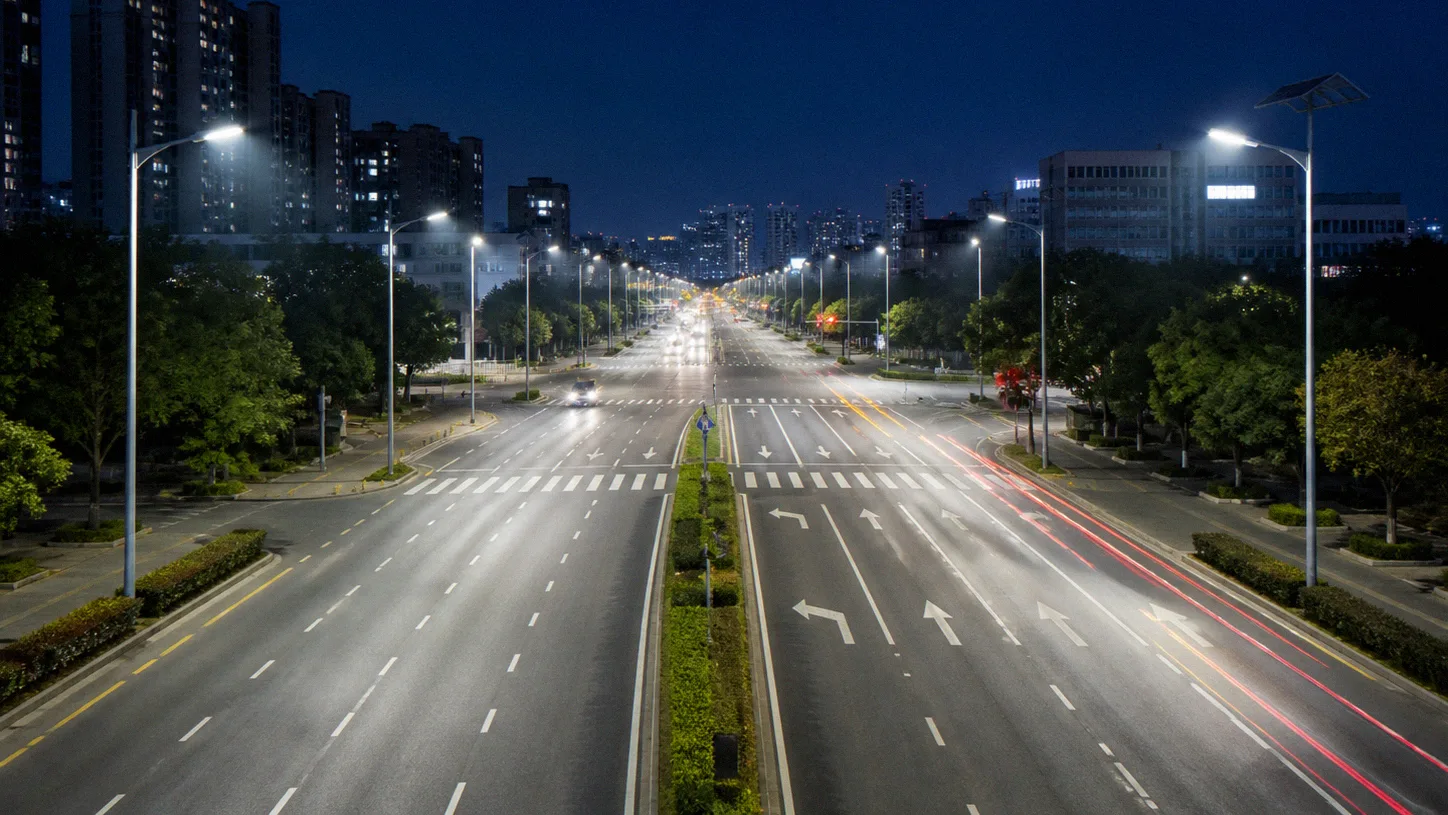
Application scenarios
A lighting project rarely fails because a lamp stopped working. It fails because the autonomy was sized for the wrong climate, the uniformity was never calculated, or the pole was not engineered for the wind zone. These four scenario pages set out the requirements, the recommended configuration and the service scope for each project type.
Mast Lighting is an integrated manufacturer: research and development, production, engineering contracting and export sit inside one organisation in Yangzhou, Jiangsu. That structure is what allows a specification to be adjusted for a project — battery capacity for a monsoon climate, pole wall thickness for a wind zone, optics for a given road width — instead of the project being adjusted to fit a catalogue.
Each scenario below combines products from our own factory: solar street lights, LED street lights, high mast systems, lighting poles, traffic structures, photovoltaic modules and LiFePO4 storage. Every configuration is confirmed by a free Dialux simulation before production, and OEM/ODM customization is available throughout.
Included with every project
Four scenarios
Compliant, energy-efficient illumination for urban arterials, residential streets, highways and rural roads — grid-powered or fully solar.
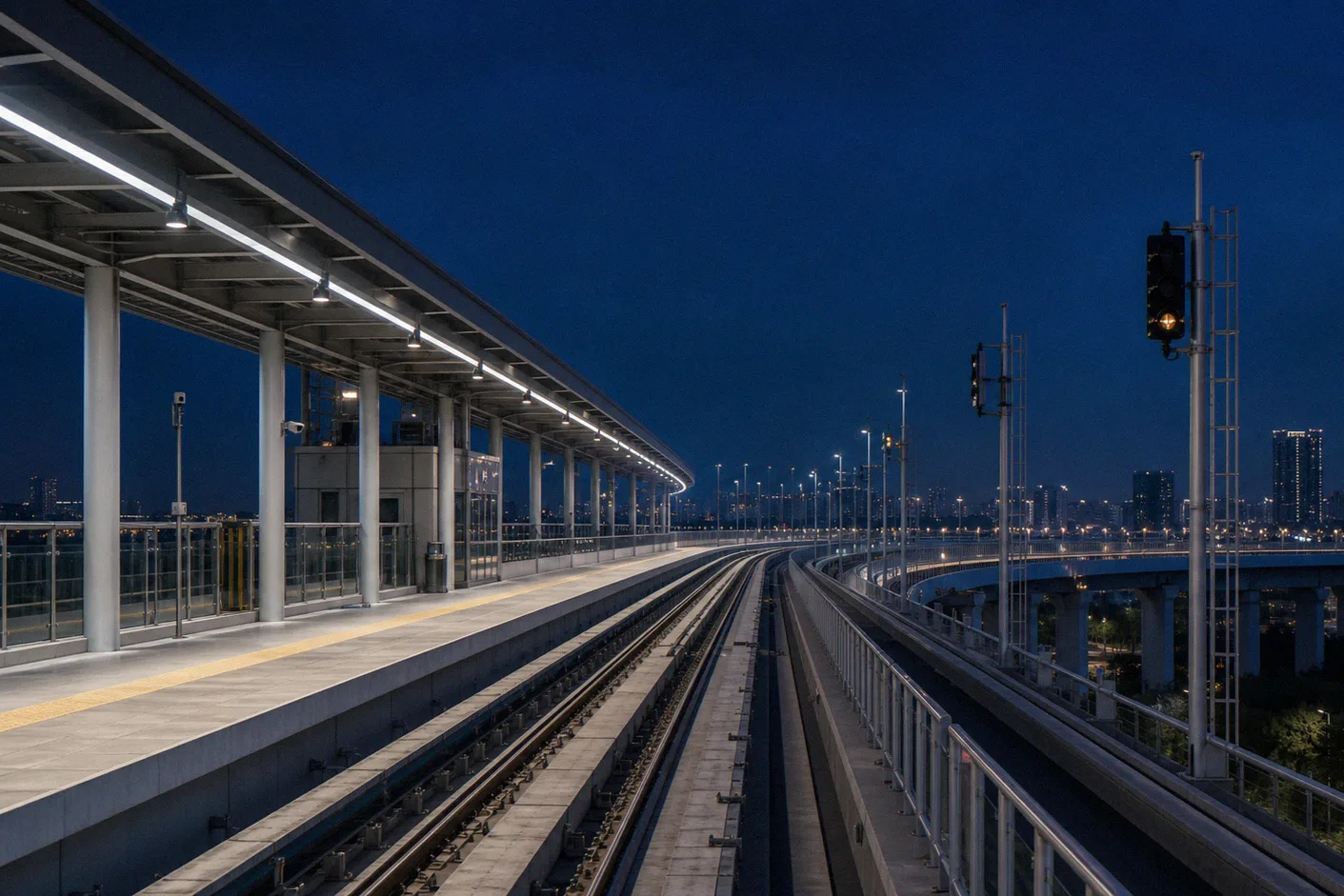
Requirements & configurationSignal poles, gantry structures and high-uniformity lighting for intersections, highway approaches, rail corridors and transit depots.
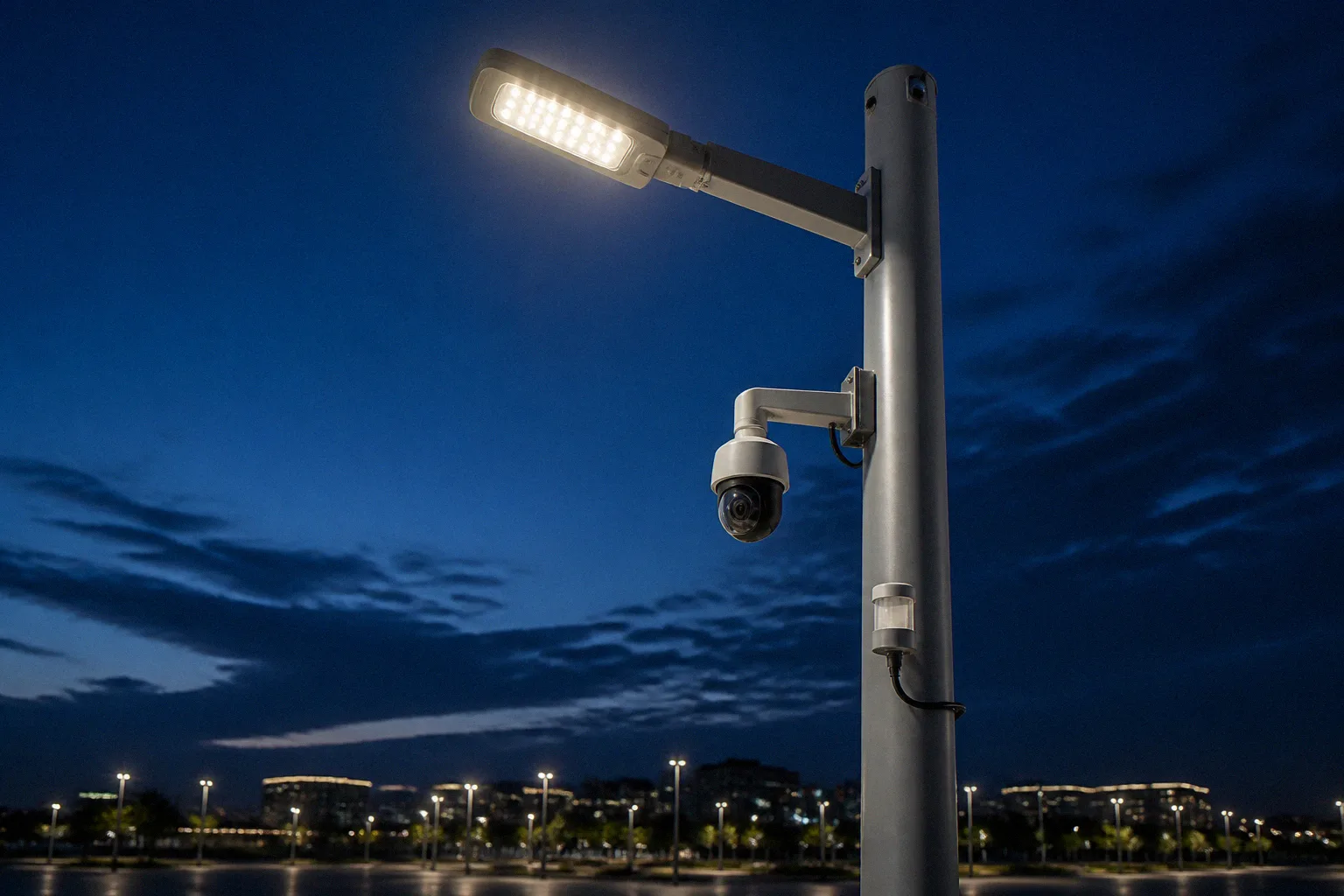
Requirements & configurationConnected lighting with dimming, remote monitoring and multi-function poles carrying cameras, sensors and communications equipment.
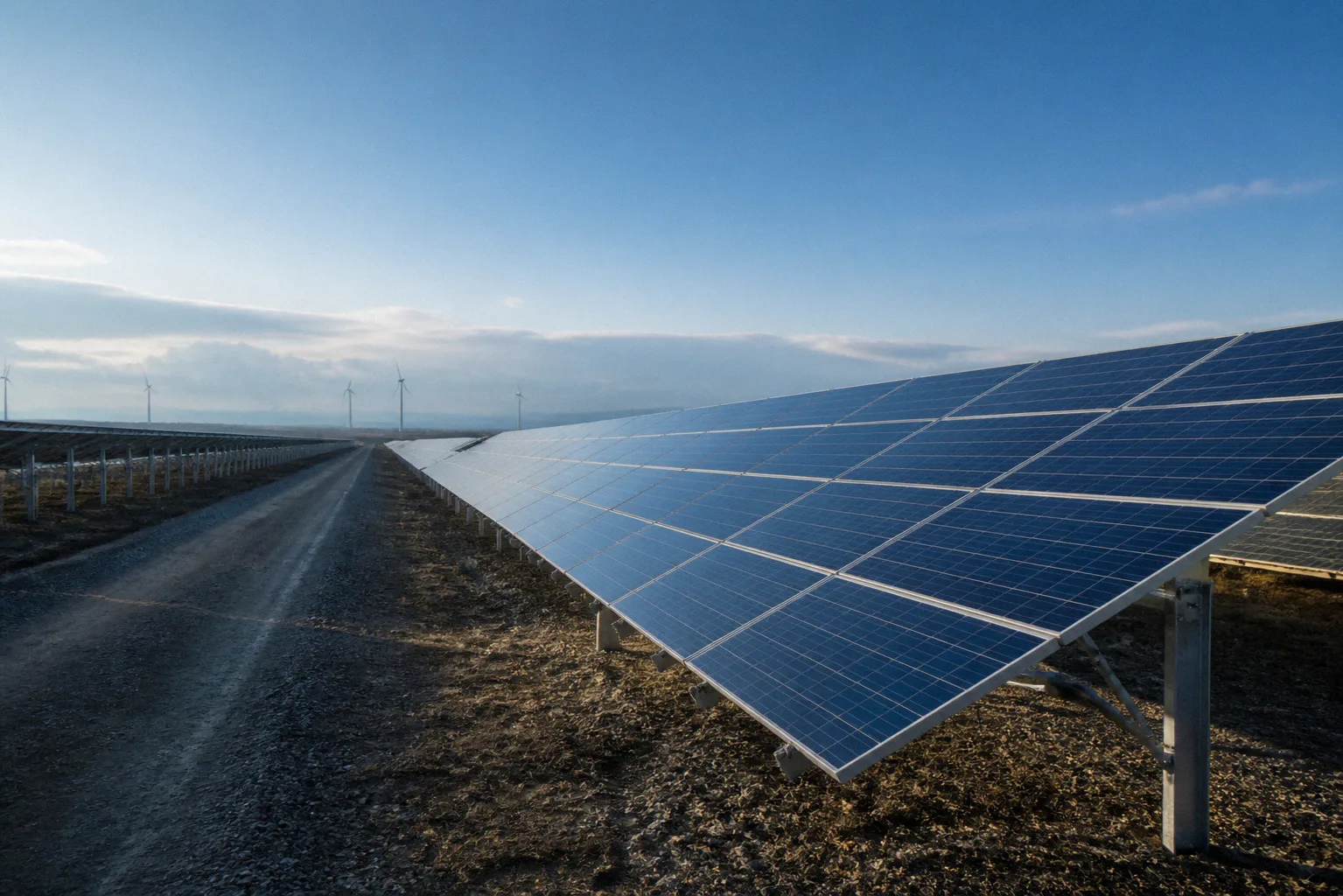
Requirements & configurationOff-grid and hybrid solar lighting with LiFePO4 storage for sites where grid power is absent, unreliable or uneconomic to extend.
Requirements & configurationStarting points
These are the configurations most projects start from. Final wattage, pole height and spacing are always set by the Dialux calculation for the actual road geometry — the table is a shortlist tool, not a substitute for the design.
| Scenario | Primary product | Typical power | Mounting |
|---|---|---|---|
| Urban arterial road | LED Street Light | 200W–320W | 10m–12m |
| Residential street | LED or Solar Street Light | 60W–150W | 6m–8m |
| Highway interchange | High Mast Light | Head cluster to project | 20m–40m mast |
| Off-grid rural road | Solar Street Light | 50W–120W | 6m–8m |
| Port / container yard | High Mast Light | Head cluster to project | 30m–60m mast |
| Park & pedestrian area | Garden Light | 30W–80W | 3m–5m column |
How a project runs
Road geometry, pole height, spacing, target lighting class, grid availability, wind zone and temperature band.
A photometric simulation showing average illuminance, uniformity ratio and glare for the proposed layout, before anything is manufactured.
Battery capacity, panel power, LED wattage, pole design, finish and smart control functions fixed against the design.
Manufacture under ISO9001 management with inspection at incoming material, in-process, ageing and pre-shipment stages.
Direct export under our own import/export rights, plus installation guidance, commissioning support and remote troubleshooting.
Solution questions
Region-specific questions on climate, grid conditions and compliance are covered on the export markets page.
Send the road or area dimensions, the pole heights under consideration and the lighting class you must meet. We return a Dialux simulation and a configuration at no charge.