Solar Street Light
All-in-one and all-in-two solar street lights in a 50W–300W range, with LiFePO4 storage and project-specific panels, poles and controls.
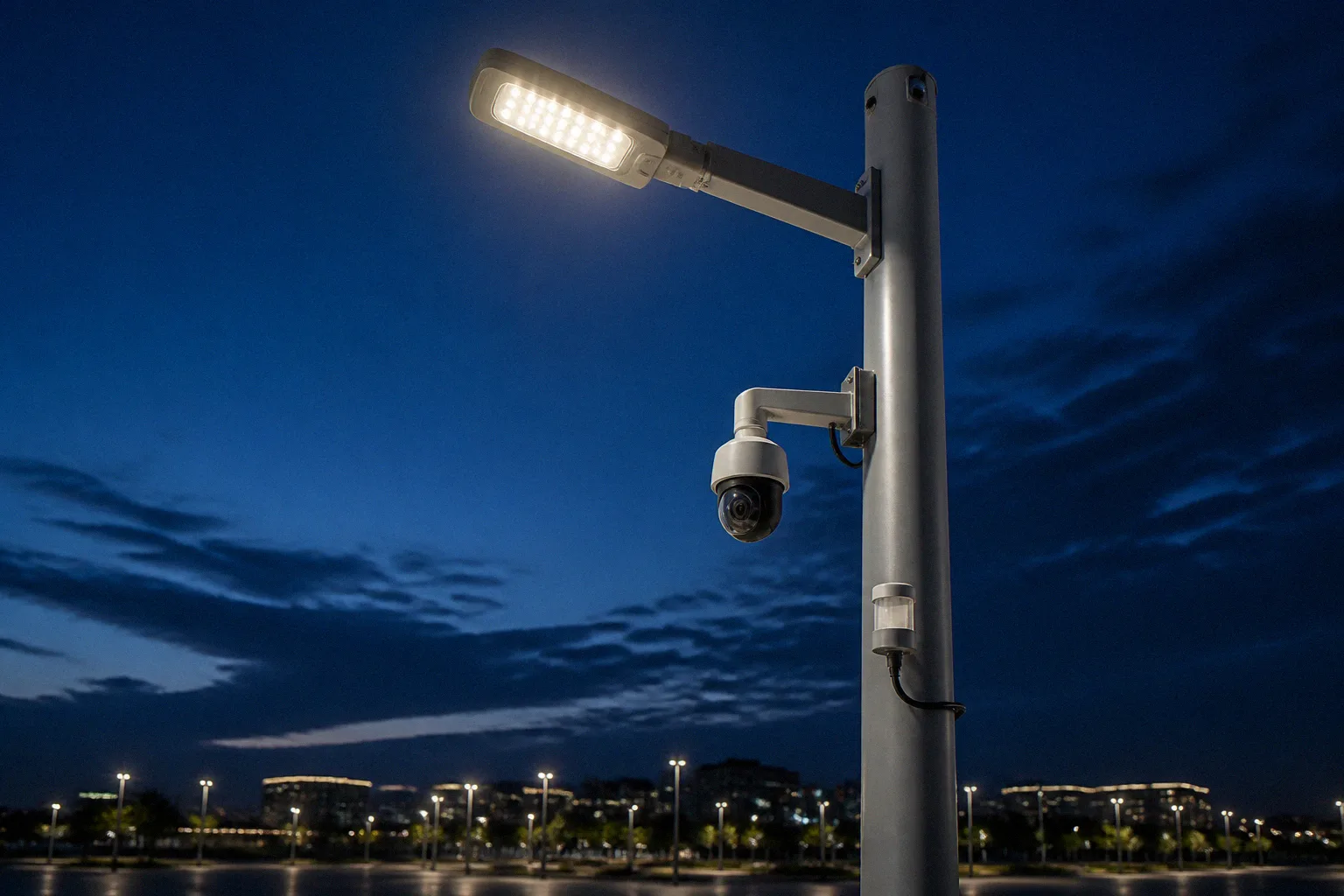
Lighting solution
Connected lighting with dimming, remote monitoring and multi-function poles carrying cameras, sensors and communications equipment.
The scenario
Street lighting is the densest, most evenly distributed powered infrastructure a city owns — a grid of poles at regular intervals, with power at the top, along every road. That is why smart-city programmes start there: the lighting column is the natural mounting point for cameras, environmental sensors and communications equipment, and the lighting load itself is the easiest municipal energy line to reduce.
The engineering problem is that a pole designed for one luminaire is not automatically a pole that can carry a camera, a sensor box and an antenna in a storm. Loads, wind area, cable routing, access for maintenance and the interaction between lighting control and other systems all have to be handled deliberately.
Design requirements
Recommended configuration
Final wattage, pole height and spacing are always confirmed by the free Dialux lighting design for the actual geometry. The table below is where most projects of this type begin.
| Sub-scenario | Product | Wattage | Pole / mounting | Spacing | Controls |
|---|---|---|---|---|---|
| Smart urban corridor | LED Street Light on multi-function pole | 160W–250W | 10m–12m galvanized with equipment brackets | Confirmed by Dialux calculation | Scheduled and adaptive dimming, remote monitoring |
| Security perimeter and campus | Solar Street Light with PIR | 60W–120W PIR models | 6m–8m galvanized | Confirmed by Dialux calculation | PIR motion boost, timer, remote control |
| Surveillance-critical junction | LED Street Light + camera mounting pole | 200W–250W | Cantilever or multi-arm to drawing | Per junction layout | Constant output during surveillance hours, fault alarm |
| Grid-unreliable public area | Hybrid solar/grid Solar Street Light | 100W–200W | 8m–10m galvanized | Confirmed by Dialux calculation | Automatic solar/grid switching, APP monitoring |
Mast Lighting solar and LED lighting supports automatic light control, timer control, PIR motion sensing, remote control, APP monitoring, intelligent dimming and fault alarms. In practice most smart-city corridors combine two or three: a scheduled dimming profile for the quiet hours, PIR boost where pedestrians appear, and fault reporting so a failed unit is known before a resident calls it in.
Surveillance value depends on the lighting under it. Cameras need adequate illuminance, controlled glare and consistent uniformity across the field of view — a dark patch between poles produces exactly the unusable footage the system was installed to avoid. We model this in the free Dialux simulation, treating the surveillance zone as a lighting requirement rather than a by-product.
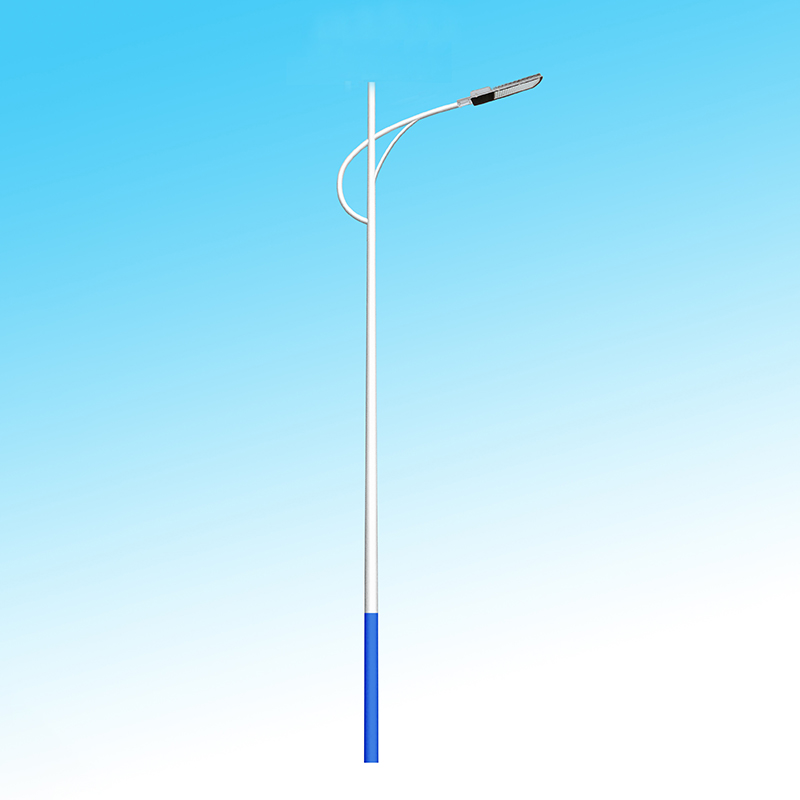
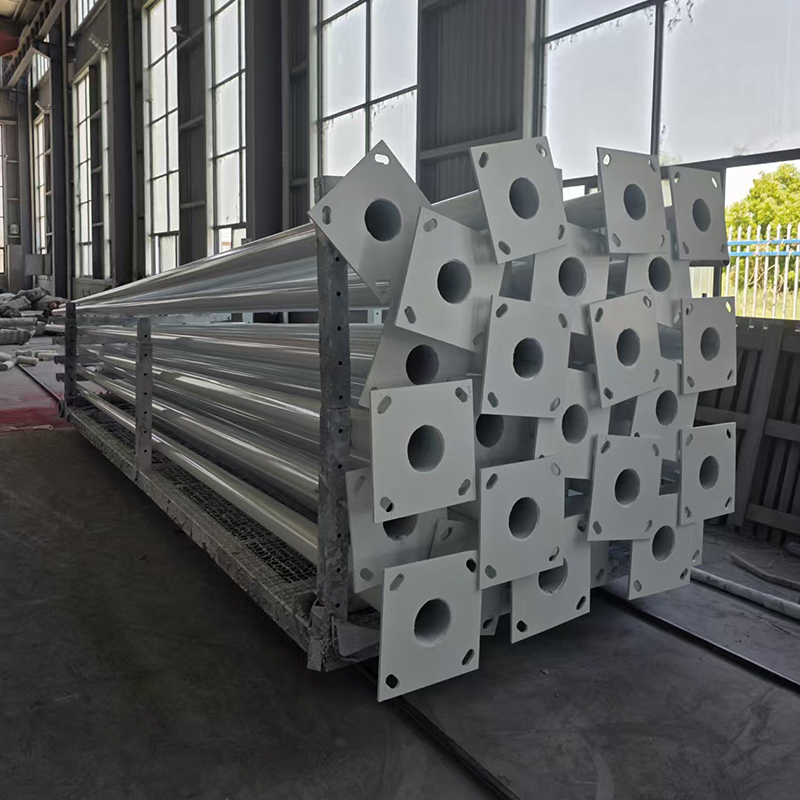
Poles can be produced with mounting brackets, internal cable routing, access doors and earthing arrangements for cameras, sensors and communications equipment, engineered for the combined load and wind area. Because we fabricate poles, signal structures and luminaires in-house, the equipment mounting is designed into the column rather than clamped on afterwards.
Security lighting that goes dark during an outage is not security lighting. For sites with unreliable supply we specify hybrid units that switch automatically between solar and grid, or fully standalone solar units with 3–7 days of LiFePO4 autonomy, so perimeter and public-area lighting stays on regardless of the network.
Service scope
Mast Lighting is TÜV Rheinland audited (MIC-ASI264744) and operates ISO9001 quality management. Engineering support is part of the supply, not a paid extra.
Start an enquiryProducts used
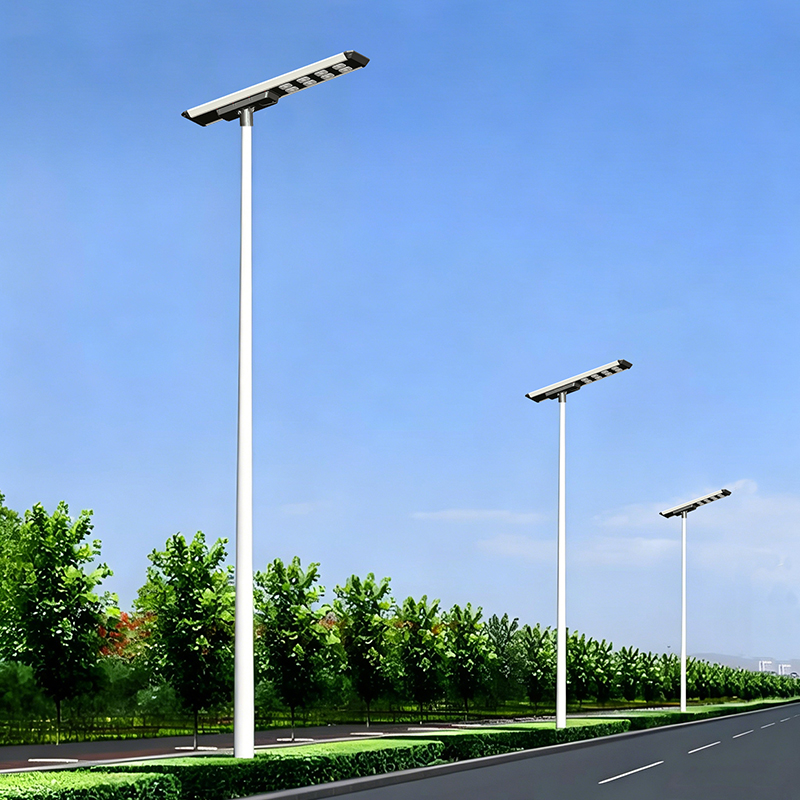
All-in-one and all-in-two solar street lights in a 50W–300W range, with LiFePO4 storage and project-specific panels, poles and controls.
AC LED street lights with supplier-listed 120W, 240W and 320W options, IP65 protection and 3000–6500 K CCT choices; final configurations confirmed by project.
Galvanized steel lighting poles supplied through Mast Lighting, with qualified size, material and finish references. Final structure and supply scope require project-specific confirmation.
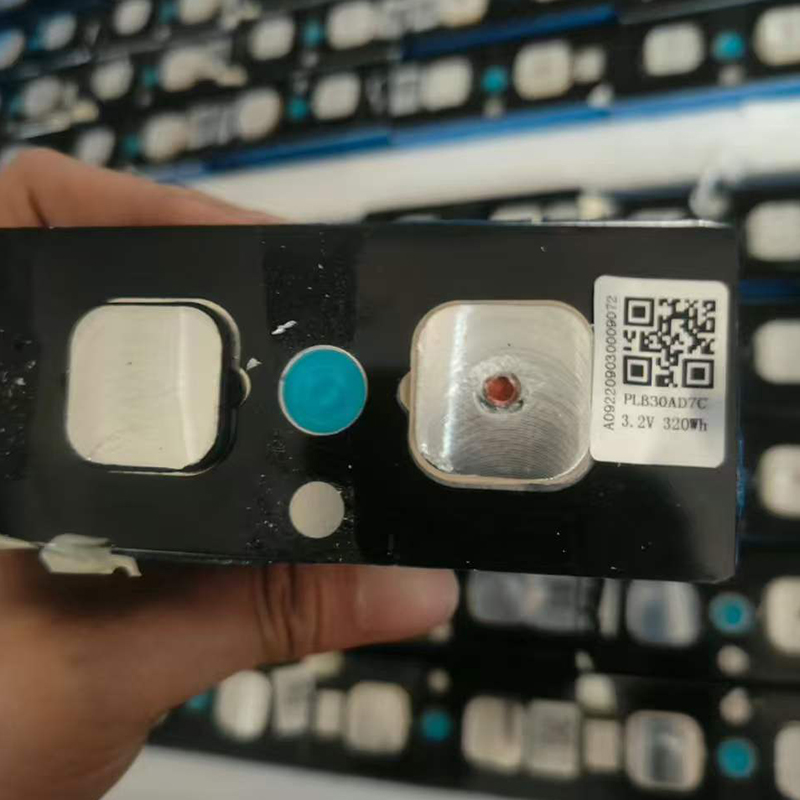
Lithium-battery sourcing for solar lighting, with original supplier photos, qualified specifications and model-specific compatibility review before quotation.
Scenario questions
Other scenarios
Compliant, energy-efficient illumination for urban arterials, residential streets, highways and rural roads — grid-powered or fully solar.
Signal poles, gantry structures and high-uniformity lighting for intersections, highway approaches, rail corridors and transit depots.
Off-grid and hybrid solar lighting with LiFePO4 storage for sites where grid power is absent, unreliable or uneconomic to extend.
Send us your road width, pole height, spacing and target lighting level. Our engineers return a Dialux simulation and a factory-direct quotation for the matching configuration.