Solar Street Light
All-in-one and all-in-two solar street lights in a 50W–300W range, with LiFePO4 storage and project-specific panels, poles and controls.
Lighting solution
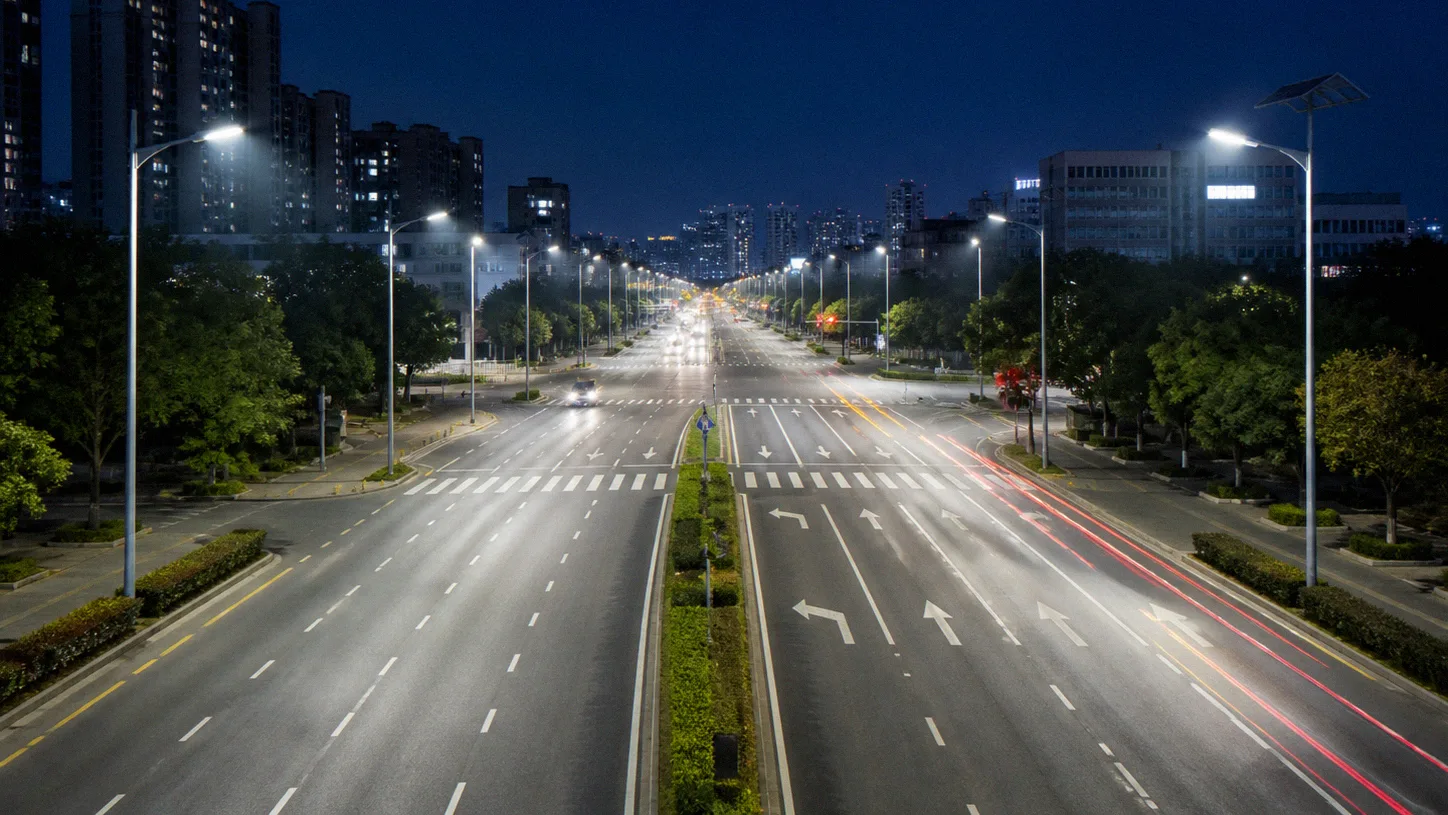
Compliant, energy-efficient illumination for urban arterials, residential streets, highways and rural roads — grid-powered or fully solar.
The scenario
Road lighting is judged by two numbers a photograph cannot show: average illuminance and uniformity. A street can look bright and still fail its lighting class if the dark patches between poles are too deep, because it is the ratio between the brightest and darkest points — not the peak brightness — that determines whether a driver sees a pedestrian stepping off a kerb.
Municipal projects add constraints on top of that. Pole positions are often fixed by existing foundations or utility corridors. Budgets are set per kilometre, not per luminaire. Rural sections may sit far from any usable grid connection, while the urban core has power but severe energy-cost pressure. And the whole installation has to be maintainable by a municipal crew for the next two decades.
Design requirements
Recommended configuration
Final wattage, pole height and spacing are always confirmed by the free Dialux lighting design for the actual geometry. The table below is where most projects of this type begin.
| Sub-scenario | Product | Wattage | Pole / mounting | Spacing | Controls |
|---|---|---|---|---|---|
| Urban arterial road | LED Street Light | 200W–320W modular | 10m–12m galvanized | Confirmed by Dialux calculation | Mains supply with time-based dimming |
| Residential street | LED Street Light or Solar Street Light | 120W–160W / 60W–100W solar | 6m–8m galvanized | Confirmed by Dialux calculation | Light control plus PIR dimming |
| Rural / unelectrified road | Solar Street Light (all-in-one) | 60W–150W | 6m–8m galvanized | Confirmed by Dialux calculation | Light control, timer, 3–7 day autonomy |
| Highway and interchange | LED Street Light + High Mast Light | 320W / high mast head cluster | 12m columns, 20m–35m masts | Confirmed by Dialux calculation | Mains supply, central monitoring optional |
Every project starts with a lighting calculation rather than a product selection. Send the road width, the number of lanes, the available or intended pole height and spacing and the lighting class you must meet, and our engineers return a free Dialux simulation showing the illuminance distribution, uniformity ratio and glare rating your layout will achieve. If the numbers do not meet the class, we adjust wattage, optics, height or spacing until they do — before anything is manufactured.
Long municipal corridors are rarely uniform. A single contract often has an electrified urban section, a peri-urban section with unreliable supply and a rural section with no grid at all. Mast Lighting supplies all three from one factory: mains LED street lights up to 200–220 lm/W for the electrified sections, standalone solar street lights with 3–7 days of LiFePO4 autonomy for the off-grid sections, and hybrid units that switch automatically between solar and grid where supply is intermittent.
Modular LED engines let a municipal crew replace a single failed module instead of a whole luminaire. Poles are hot-dip galvanized inside and out and engineered to withstand winds up to Grade 12 typhoon level. Solar units use LiFePO4 cells with a typical 5–8 year service life and operate from -40°C to 65°C, so seasonal extremes do not force early replacement.
Luminaires, poles, foundation anchor hardware, controls and — where the project calls for it — the engineering contracting scope covering municipal infrastructure, landscape and sports facility works. Installation, commissioning and remote troubleshooting support are included with supply.
Service scope
Mast Lighting is TÜV Rheinland audited (MIC-ASI264744) and operates ISO9001 quality management. Engineering support is part of the supply, not a paid extra.
Start an enquiryProducts used
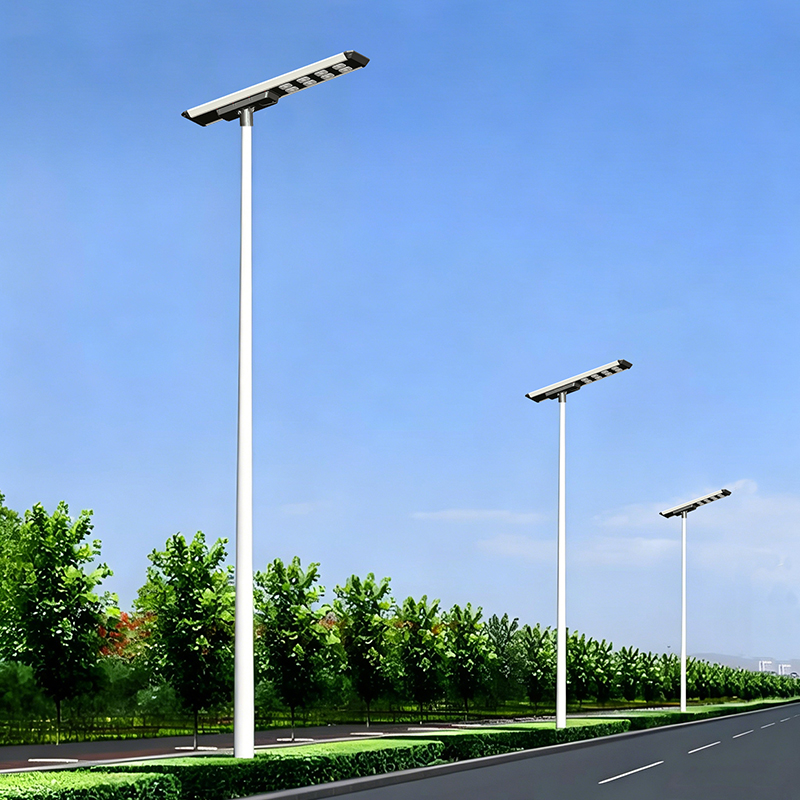
All-in-one and all-in-two solar street lights in a 50W–300W range, with LiFePO4 storage and project-specific panels, poles and controls.
AC LED street lights with supplier-listed 120W, 240W and 320W options, IP65 protection and 3000–6500 K CCT choices; final configurations confirmed by project.
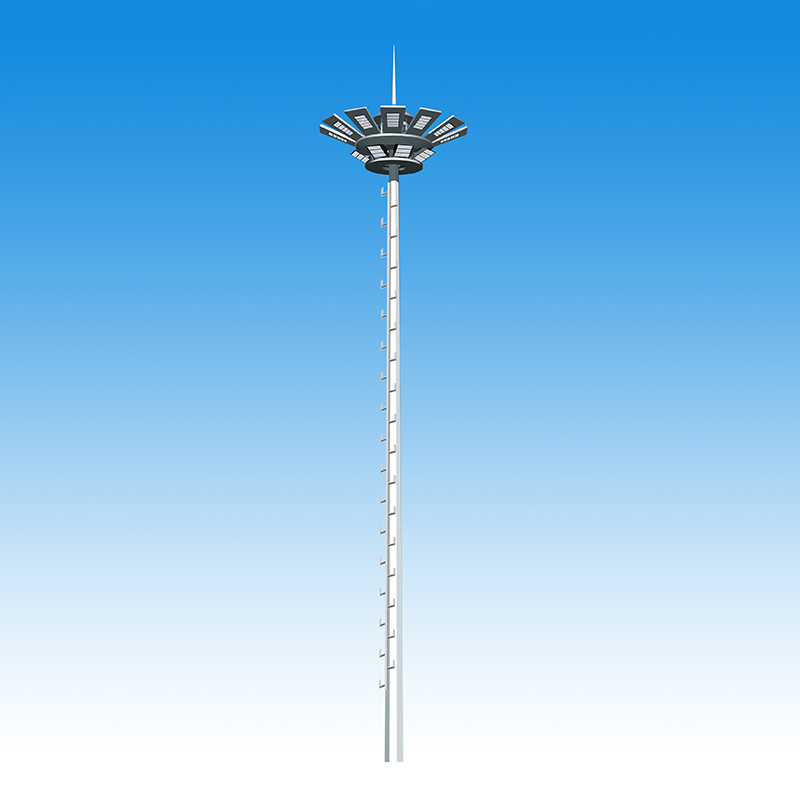
High mast lighting for large-area projects, with original supplier photos, qualified luminaire specifications and project-specific mast engineering requirements.
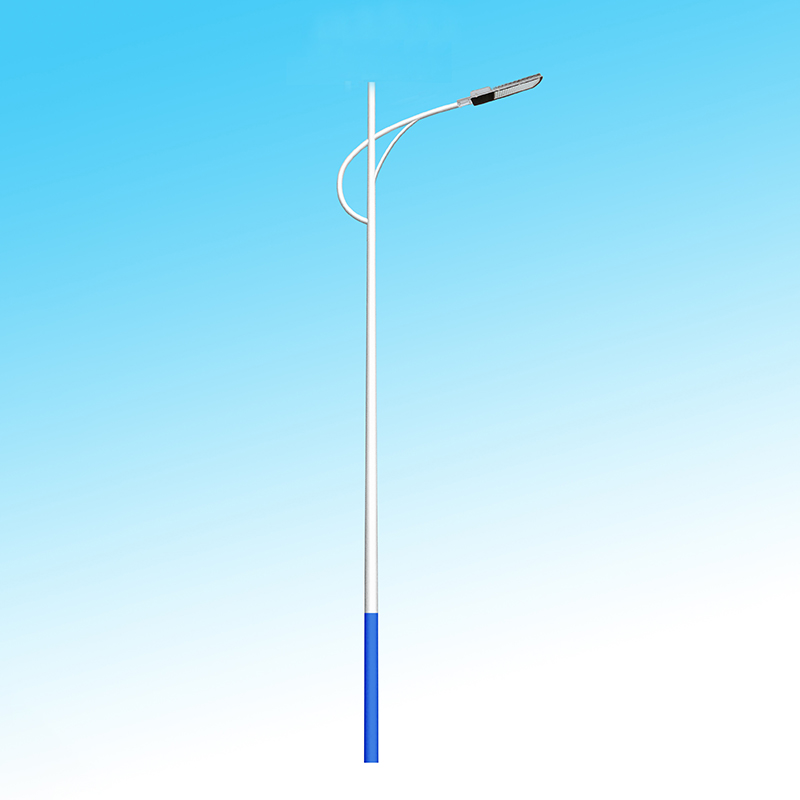
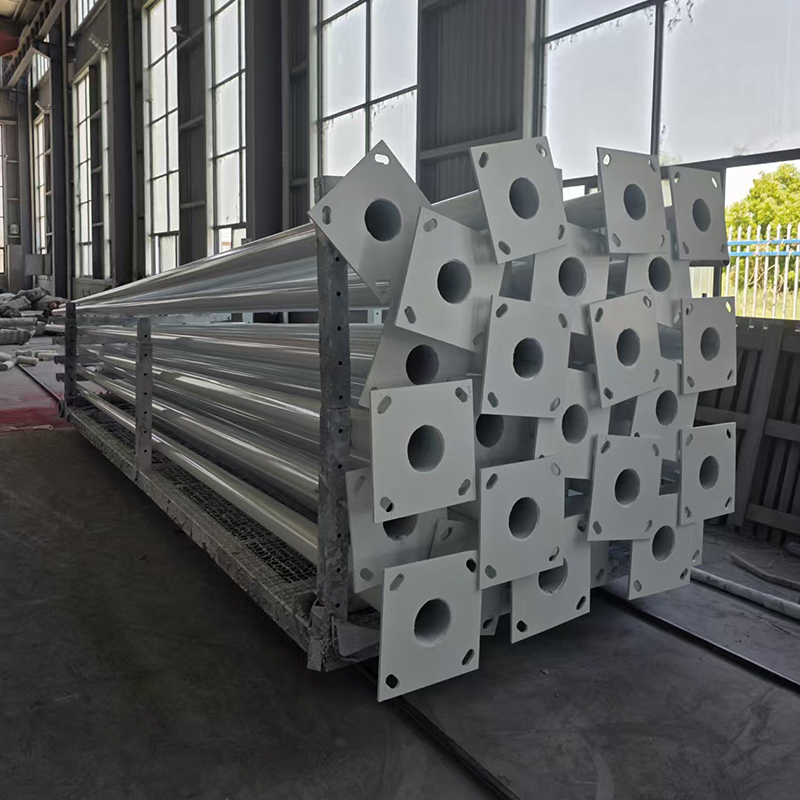
Galvanized steel lighting poles supplied through Mast Lighting, with qualified size, material and finish references. Final structure and supply scope require project-specific confirmation.
Scenario questions
Other scenarios
Signal poles, gantry structures and high-uniformity lighting for intersections, highway approaches, rail corridors and transit depots.
Connected lighting with dimming, remote monitoring and multi-function poles carrying cameras, sensors and communications equipment.
Off-grid and hybrid solar lighting with LiFePO4 storage for sites where grid power is absent, unreliable or uneconomic to extend.
Send us your road width, pole height, spacing and target lighting level. Our engineers return a Dialux simulation and a factory-direct quotation for the matching configuration.