A specification that performs well in one export market can underperform badly in another, even when the product is identical. The variables are climate, grid reliability and the type of project the lighting is bought for. This guide covers the four regions Mast Lighting supplies most often.
Africa: off-grid distance and heat
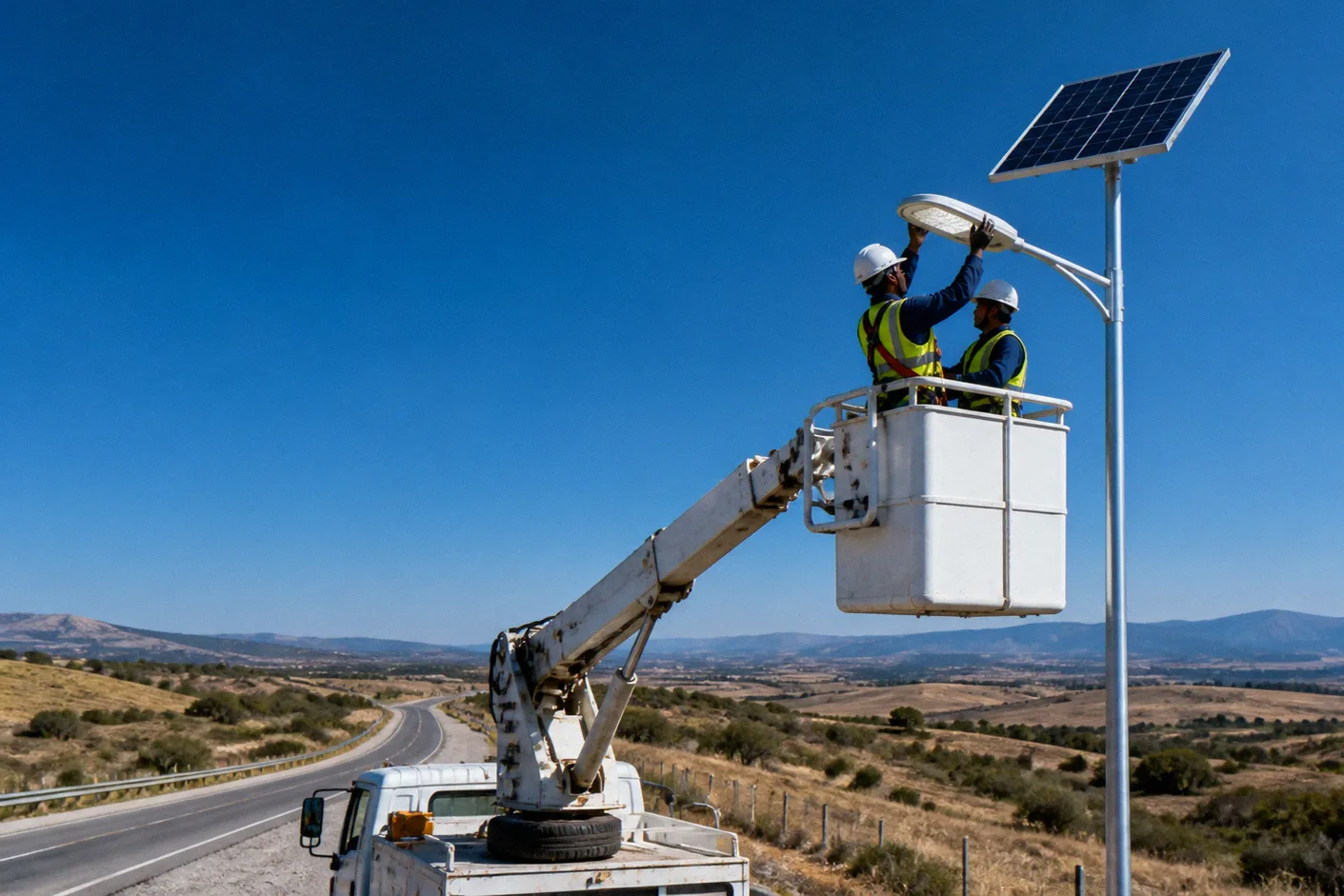
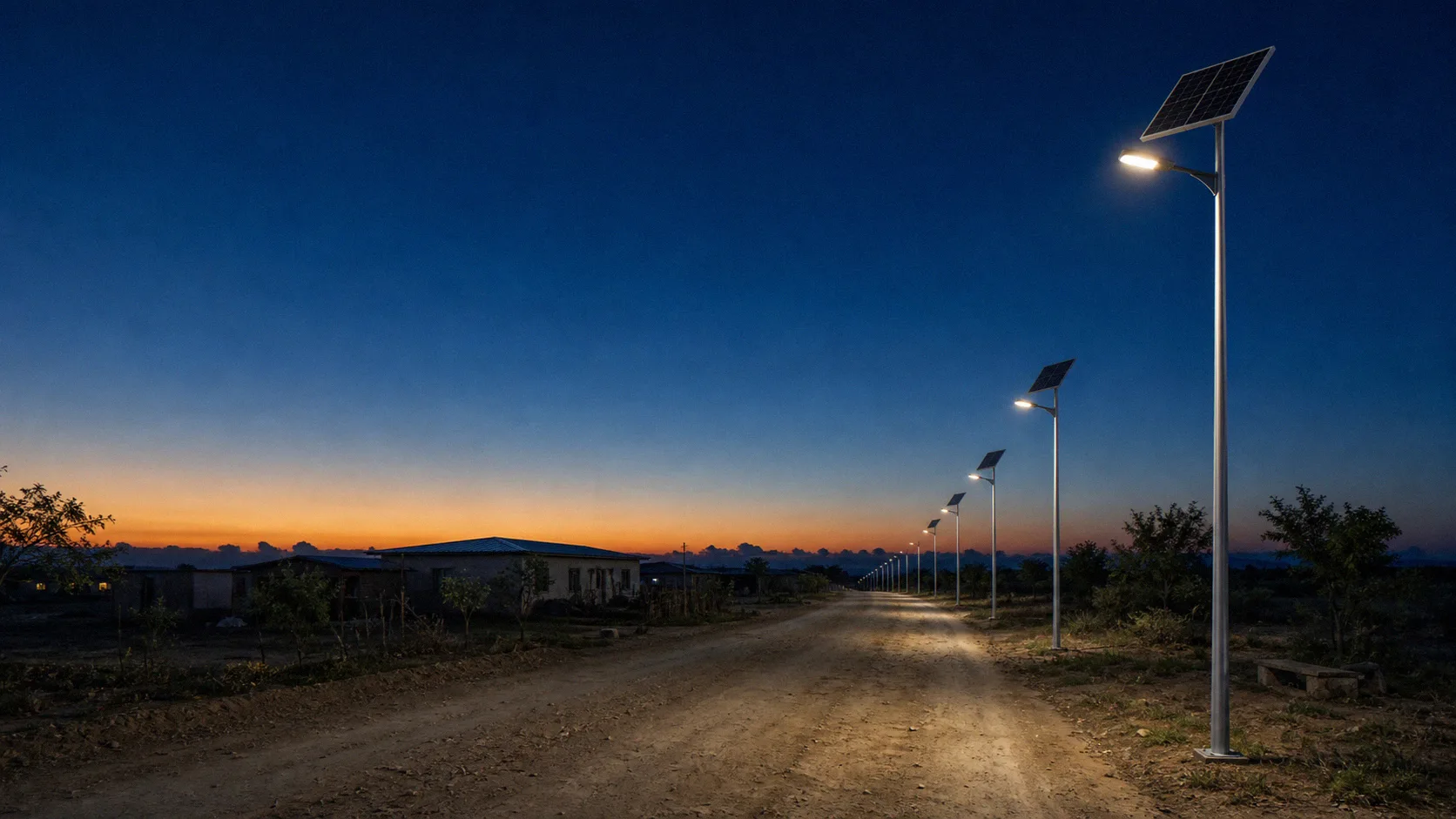
The defining condition across much of the continent is distance from usable grid infrastructure. Where extending a connection costs more per kilometre than the lighting itself, standalone solar street lights are the economically obvious answer rather than a green preference.
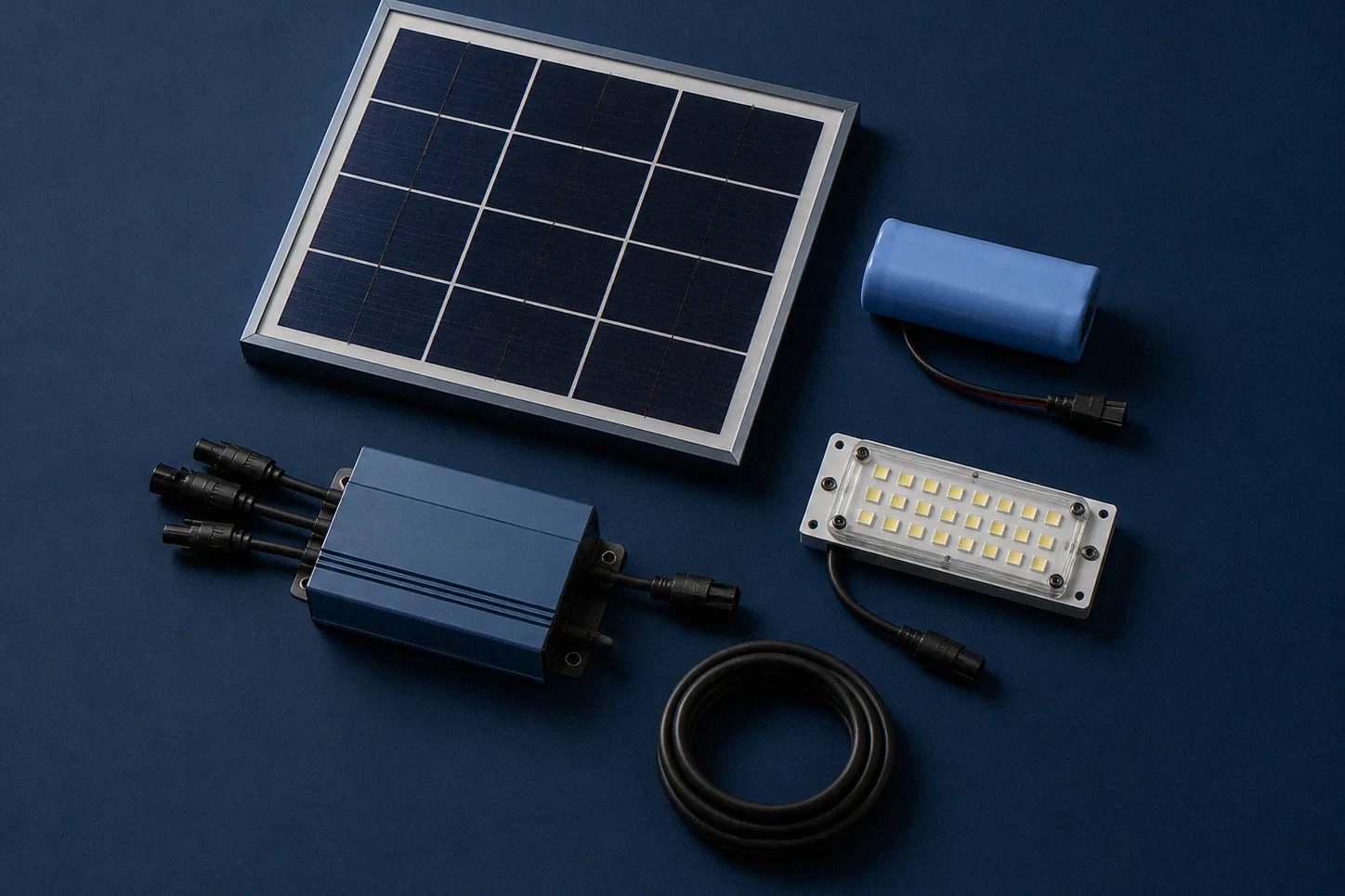
Specification priorities: adequate autonomy for the local rainy season (3–7 days as standard, more where the wet season is long); LiFePO4 chemistry rated for high ambient temperatures; IP65/IP66 sealing against dust; and all-in-one units for fast deployment on village and rural roads where installation crews and access equipment are limited. Mast Lighting's operating band of -40°C to 65°C covers the high-heat end comfortably.
Middle East: extreme heat, dust and large infrastructure
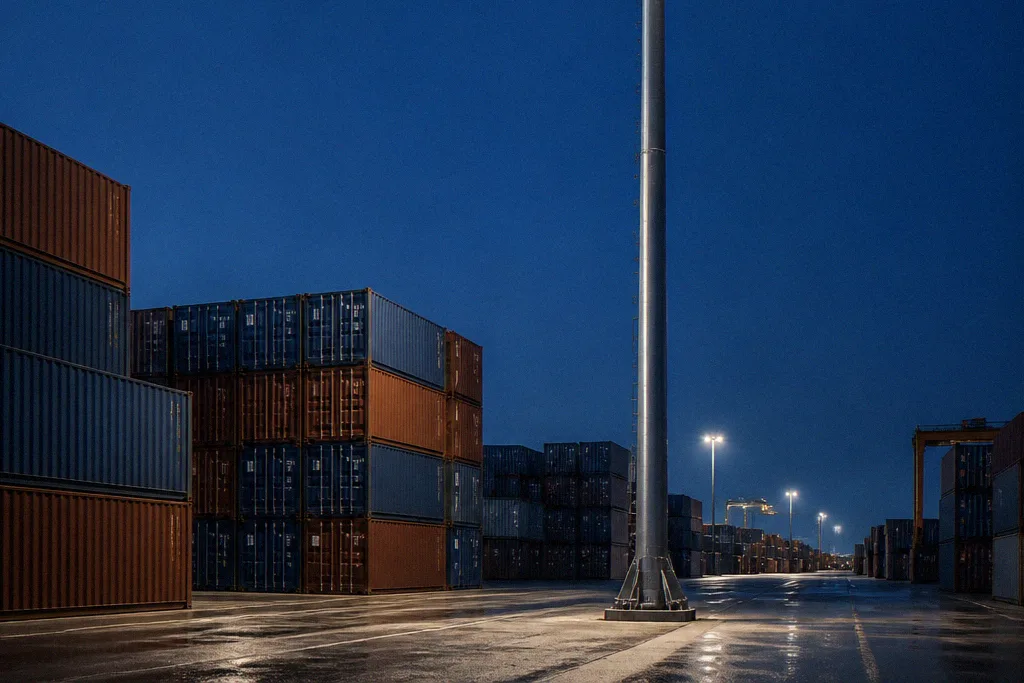
High ambient temperature is the dominant stress on both LED drivers and batteries, and airborne dust degrades panel output between cleanings. Projects skew toward large infrastructure — highways, interchanges, ports and municipal programmes — where mains supply exists and the priority is high-efficacy, high-uniformity LED street lighting and high mast systems for large open areas.
Specification priorities: high efficacy (up to 200–220 lm/W) to keep connected load down; die-cast aluminium housings with effective passive cooling; anti-glare optics for high-speed roads; and hot-dip galvanized structures. Where solar is used, panel cleaning schedules must be planned into the maintenance regime.
Southeast Asia: typhoons, humidity and monsoon autonomy
Two structural issues dominate: wind loading and water. Coastal and island locations see typhoon-strength winds, which makes pole engineering a primary specification item rather than an afterthought — Mast Lighting poles are engineered to withstand winds up to Grade 12 typhoon level and are galvanized inside and out against humid, salt-laden air.
Monsoon seasons also push autonomy requirements to the top of the range. A configuration sized for three rainy days will fail in a region with two-week overcast stretches; specify extended storage instead. Rapid urban and rail transit build-out also drives demand for traffic signal poles and coordinated intersection packages.
South America: terrain diversity and municipal tendering
The range of conditions within a single country can be extreme — high-altitude cold, humid tropical lowland and arid coast may all appear in one national programme. This makes a one-specification-fits-all approach unusually risky, and makes per-section sizing valuable.
Specification priorities: wide operating temperature range; battery capacity and panel power specified per section rather than nationally; and documentation depth for municipal and highway tender processes, where a photometric calculation and a full parameter table are frequently required as part of the submission.
What applies everywhere
- Size autonomy to the worst season, not the annual average
- Specify the pole as a structure, with a stated wind rating
- Cross-check wattage against efficacy before comparing prices
- Request a photometric calculation for the actual layout — Mast Lighting provides free Dialux design
- Plan panel cleaning into the maintenance regime in dusty environments
For a region-by-region view of how we configure systems for these markets, see our export markets page.