The choice between high mast lighting and conventional street lighting columns is usually settled by the shape of the area being lit. Linear routes want columns. Large open areas want masts. The interesting cases sit in between, and that is where the comparison below is useful.
The geometric difference
A conventional street lighting column, typically 6–12 metres, distributes light along a road using asymmetric optics — the beam is shaped to the carriageway. A high mast, typically 20–60 metres, carries a cluster of luminaires and floods a wide area radially from one elevated point.
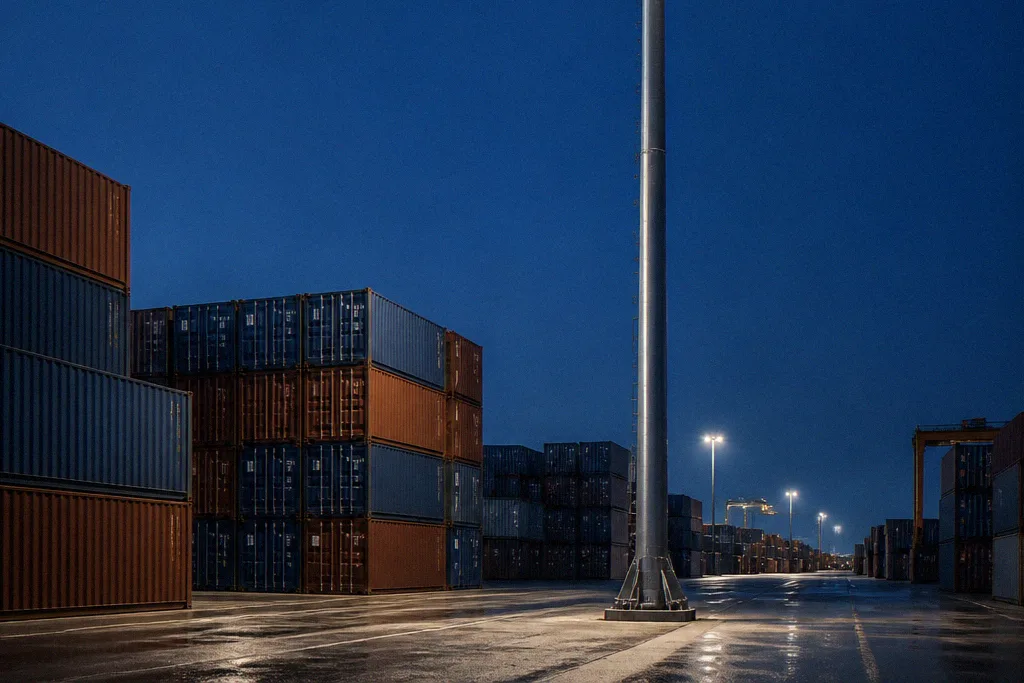
On a road, columns win: the light is placed where it is needed with little spill. On a container yard, apron or stadium, columns lose badly — you would need dozens of them, each an obstruction to vehicle movement and each with its own foundation and cable run.
Comparison at a glance
| Factor | Conventional columns | High mast |
|---|---|---|
| Best geometry | Linear routes, streets, footpaths | Large open areas, yards, interchanges |
| Typical height | 6m – 12m | 20m – 60m |
| Foundations | Many small foundations | Few large engineered foundations |
| Ground obstruction | Frequent poles in the working area | Minimal — area stays clear |
| Maintenance access | Standard access equipment | Raising-lowering carriage or specialist access |
| Uniformity control | Precise along the route | Broad, requires careful aiming |
Where high mast is clearly correct
- Ports, container yards and freight terminals
- Airport aprons and service areas
- Stadiums and sports facilities
- Mining sites and chemical plants
- Logistics parks and open storage yards
- Complex highway interchanges where multiple carriageways converge
Where columns remain correct
- Urban arterial and residential streets
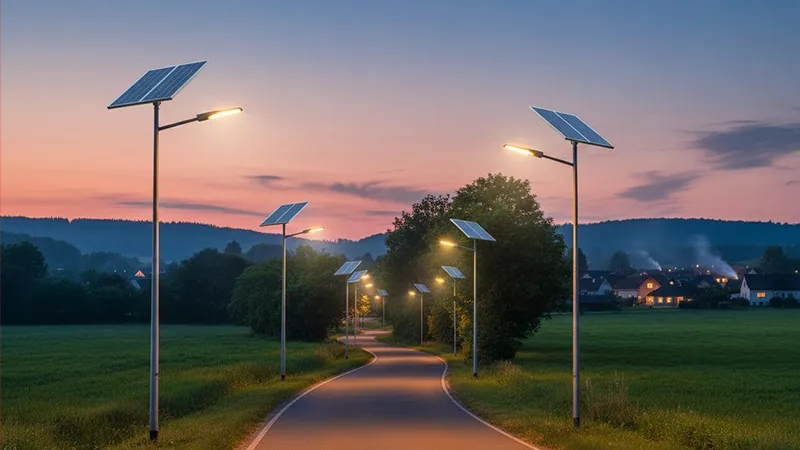
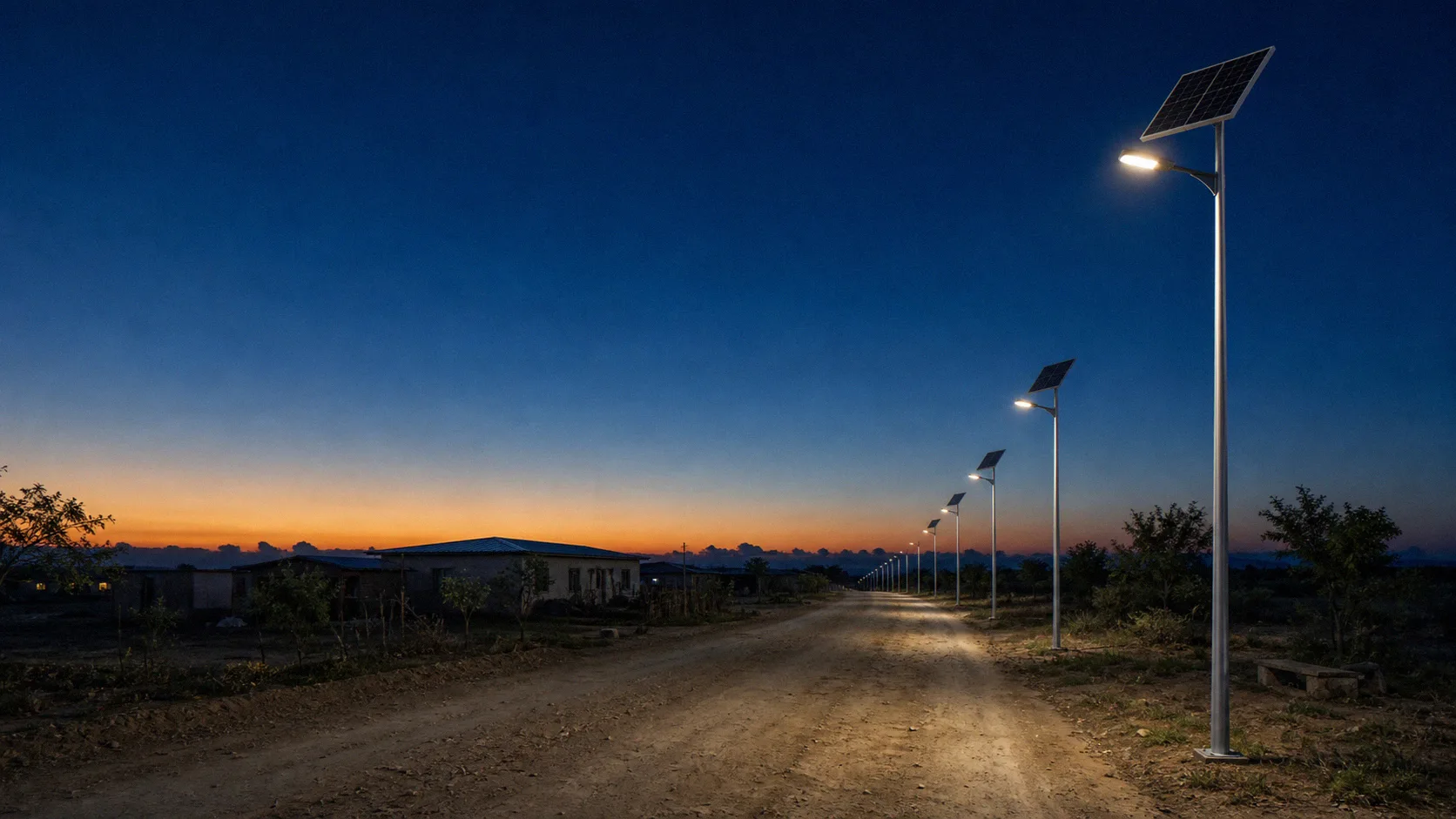
- Rural and village roads (including off-grid solar)
- Footpaths, cycleways and pedestrian zones
- Car parks small enough for a handful of columns
The maintenance question decides many projects
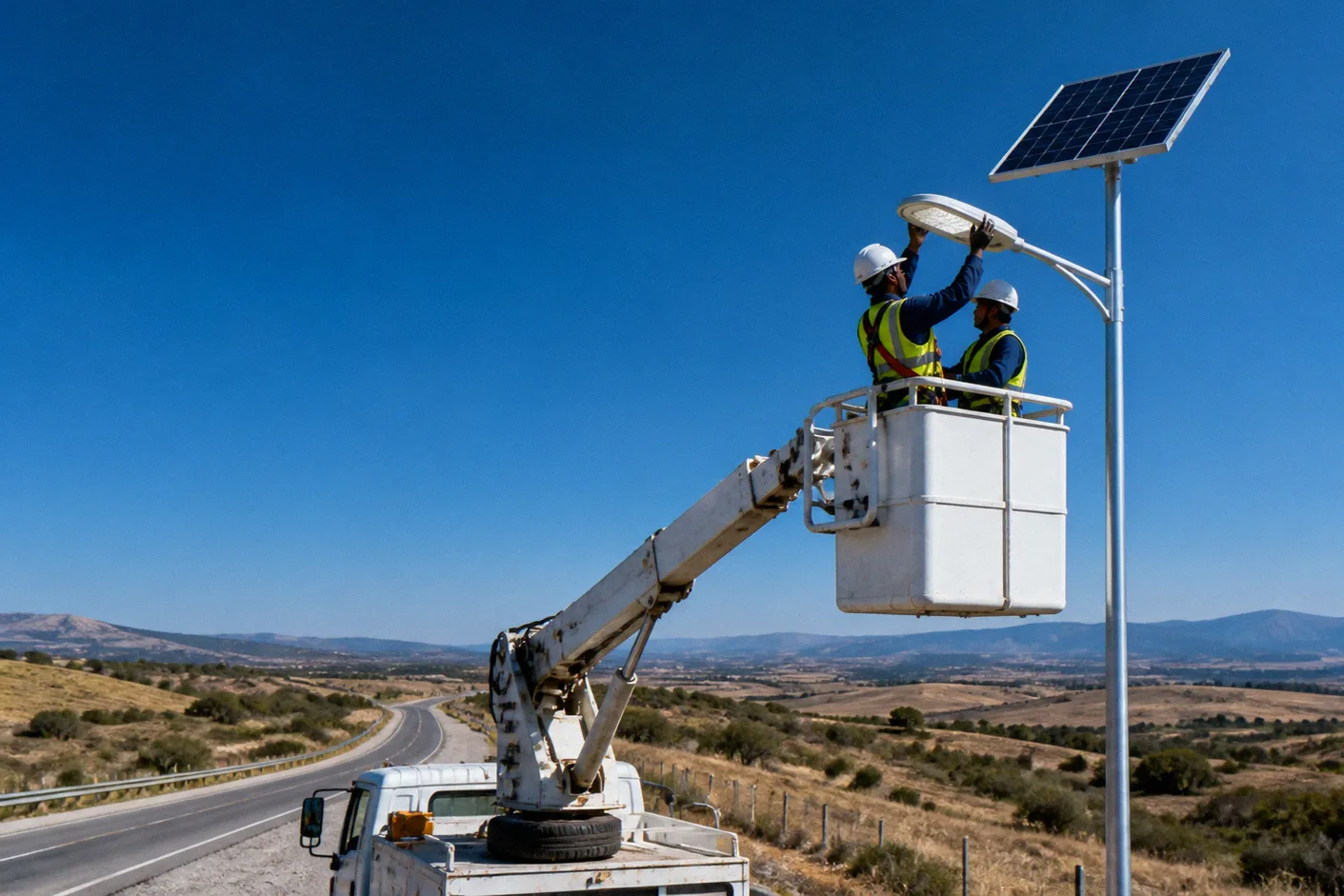
Servicing a luminaire 40 metres up is not a ladder job. Masts can be supplied with a raising-and-lowering lantern carriage, which winches the luminaire ring to ground level for maintenance and removes the need for specialist access equipment. If a site lacks reliable access to lifting equipment, this option often decides the specification on its own.
Interchanges: usually both
Large interchanges commonly use both. High masts light the central area and the merging zones from above, while conventional columns handle the approach roads where directional beam control matters. Getting the transition right — avoiding a bright-to-dark step as a driver leaves the mast's coverage — is a photometric problem, which is why we model the whole junction rather than each element separately in the free Dialux simulation.
Cost drivers to compare properly
Comparing a mast price against a column price is meaningless. Compare the delivered system: number of foundations, cabling runs, connected load, access requirements for maintenance and the number of obstructions introduced into the working area. On a large yard, the mast solution is often cheaper on all five counts even when the individual structure costs more.