Most solar street light quotations look identical: a wattage figure, an IP rating, a photo and a price. The differences that decide whether an installation is still working in year five are rarely on that page. This checklist covers what to ask for, in the order it matters.
1. Battery chemistry and capacity — ask for both
The battery is the component most likely to end a solar street light's service life. LiFePO4 (lithium iron phosphate) is the standard for outdoor lighting because it tolerates deep daily cycling and stays thermally stable inside a sealed housing in direct sun. Mast Lighting uses LiFePO4 across the solar range, with a typical service life of 5 to 8 years.
Capacity matters as much as chemistry, and a wattage figure alone tells you nothing about it. Ask for the capacity in watt-hours and the assumed nightly load. A 100W lamp running six hours needs roughly 600Wh per night before losses — if the quoted battery cannot store several nights of that, the autonomy claim is arithmetic that has not been done.
2. Autonomy days, stated for your climate
Autonomy is the number of consecutive overcast days the system keeps working. Standard Mast Lighting configurations cover 3 to 7 rainy days, and larger capacities are specified for monsoon regions. The correct number is a climate question, not a product tier: an equatorial site with reliable daily sun needs less storage than a site with a three-week rainy season, and buying the same configuration for both means overpaying in one place and going dark in the other.
3. Real LED wattage, not marketing wattage
Inflated wattage claims are the most common problem in this market. A useful cross-check is efficacy: a credible modern LED road luminaire delivers a stated lumen output consistent with roughly 130–220 lm/W. If a quoted lumen figure divided by the quoted wattage lands far outside that band, one of the two numbers is wrong. Mast Lighting states LED wattage from 50W to 300W on the solar range and up to 200–220 lm/W efficacy on the mains LED street light range.
4. Ingress protection and temperature range
IP65 resists dust and water jets; IP66 resists powerful jets. Both are appropriate outdoors, and both are meaningless if the operating temperature band does not cover your site. Mast Lighting solar street lights are rated IP65/IP66 and operate from -40°C to 65°C — the high end matters more than buyers expect, because a black housing on a sunny afternoon runs well above ambient.
5. All-in-one or split
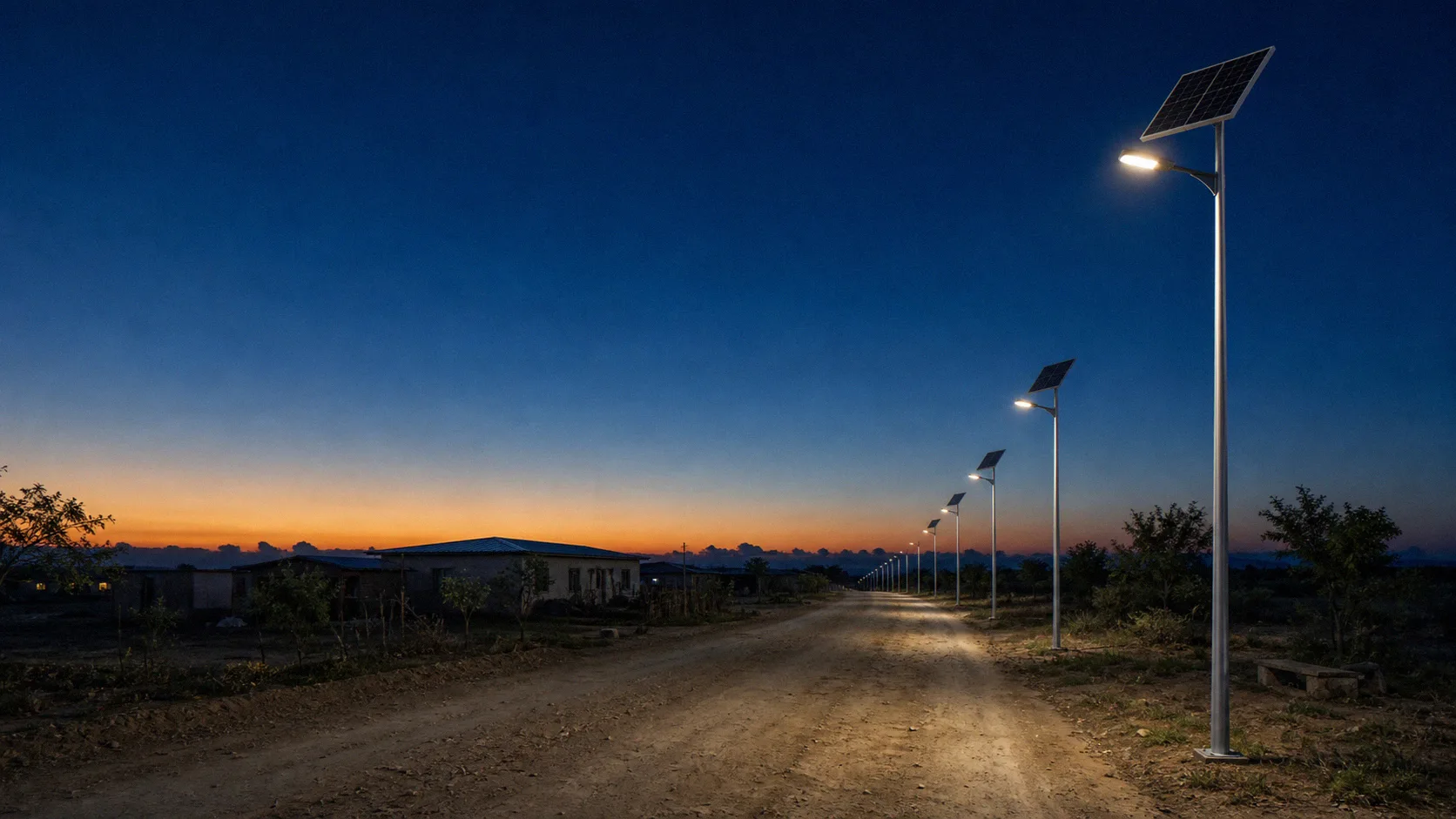
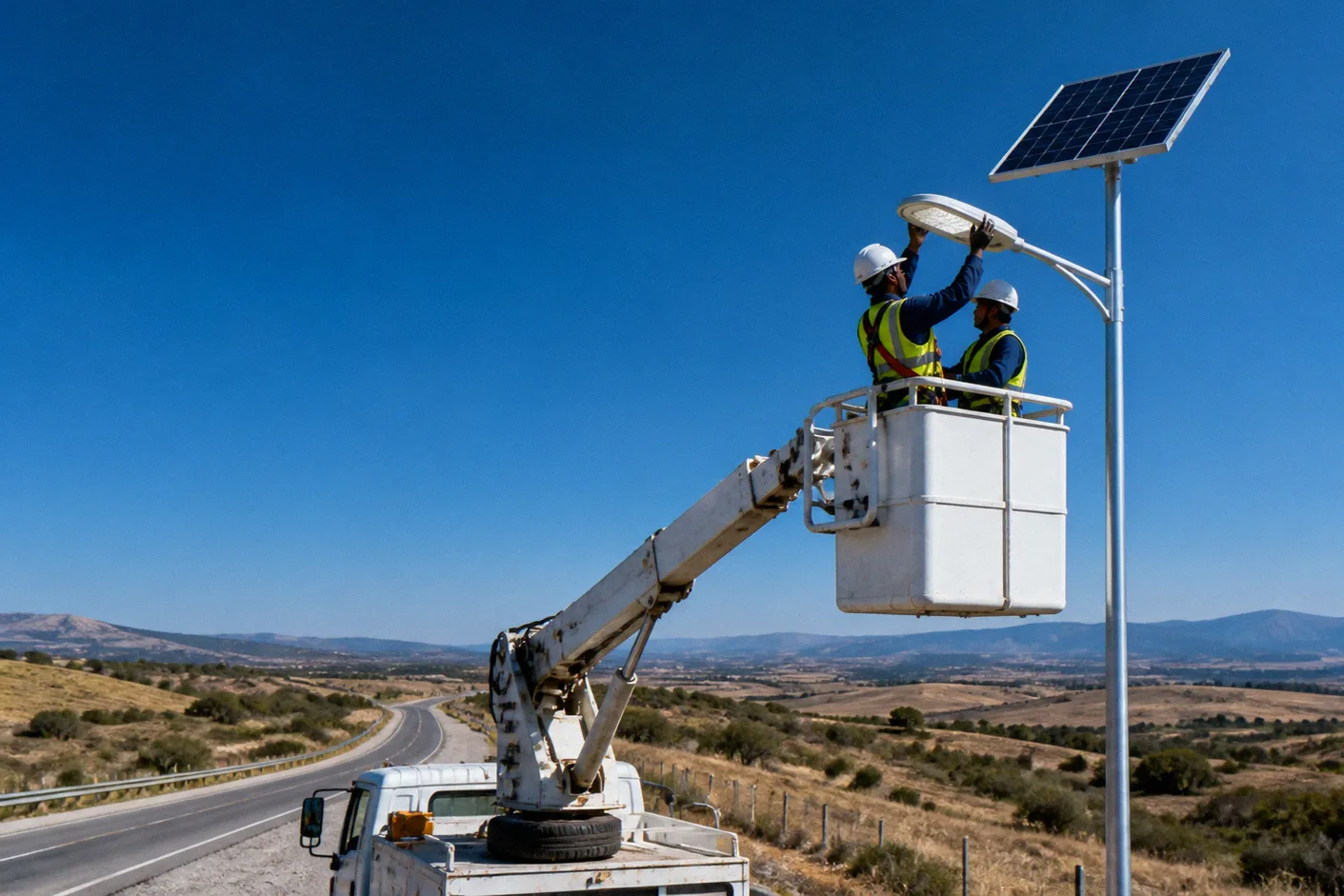
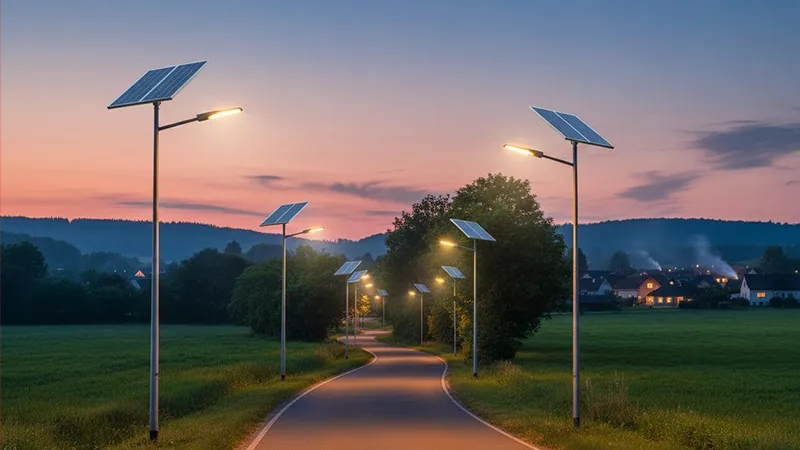
All-in-one units integrate panel, battery, LED and controller in one housing. They install as a single piece, which cuts installation cost and time — the right choice for village roads, pathways, parking areas and residential streets. Split (all-in-two) systems separate the panel from the luminaire, reducing wind load on tall poles and improving heat dissipation, which suits highways, coastal sites and higher-power installations.
6. The pole is part of the system
A lighting column carries the load through every storm of its service life. Hot-dip galvanizing inside and out protects the welds and the shaft interior where corrosion starts. Mast Lighting lighting poles come in 6m, 8m, 10m and 12m heights, engineered to withstand winds up to Grade 12 typhoon level, and ship with base flanges and anchor bolt cages.
7. Ask for a lighting calculation before you order
The single most useful thing a supplier can give you before an order is a photometric simulation of your actual layout. Mast Lighting provides a free Dialux lighting design from your road width, pole height, spacing and target lighting class, showing the illuminance and uniformity the configuration will deliver. If the numbers miss the class, it is far cheaper to change the specification then than after delivery.
Checklist summary
- LiFePO4 chemistry, with capacity stated in watt-hours
- Autonomy days matched to your rainy season, not a default
- LED wattage cross-checked against a credible lm/W figure
- IP65/IP66 plus an operating temperature band that covers your site
- All-in-one for simple installs, split for highways and tall poles
- Hot-dip galvanized poles with the correct wind rating
- A Dialux simulation of your layout before manufacture
If you want a configuration checked against your own project parameters, our solar street light calculator gives a first estimate and our engineers verify it.